
Drone FAQs: Got a drone questions?
Here are the most common queries we get about drone licensing, training, compliance and technology. If you don’t find what you’re looking for, feel free to contact us directly.
Drone FAQs: Entry Level Drone Training & Advanced DJI Training
Q: What’s the difference between an RPC and an RPL?
A: There is no difference — both refer to the Remote Pilot Certificate, which is the formal license required by SACAA to operate drones commercially in South Africa.
Q: How long does the RPC course take?
A: On average, 6–8 weeks including theory, practicals, exams and SACAA submission. It can vary based on your availability and progress.
Q: Can I train online?
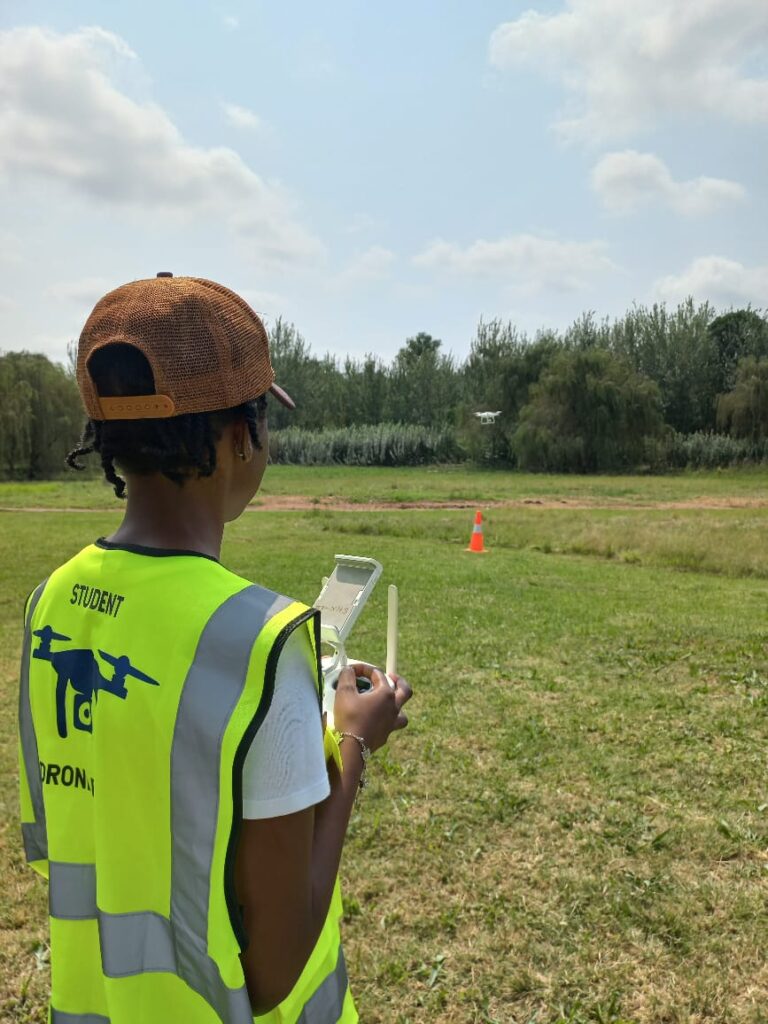
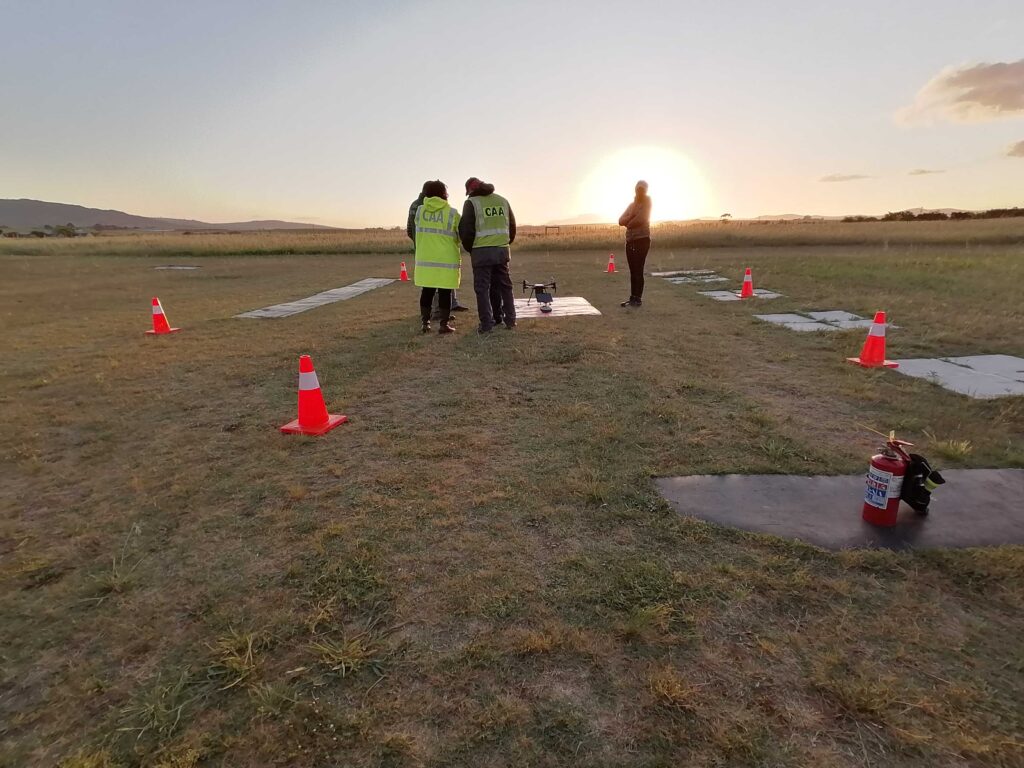
A: Theory components can be completed via Zoom. Practical training and exams must be done in person at our training site in Midrand.
Q: Do I need a medical certificate?
A: Yes. You’ll need a valid Class 3 aviation medical certificate issued by a SACAA-approved Aviation Medical Examiner.
Q: Do you help with BVLOS or Instructor ratings?
A: Absolutely. We offer BVLOS, Fixed Wing, UAS Maintenance and Instructor Rating courses. Browse our Drone Academy page for more info.
Drone FAQs: UASOC Compliance and Licensing
Q: What is a ROC and who needs it?
A: A ROC (Remote Operator Certificate) is required for any entity operating drones for commercial purposes. It proves you meet SACAA standards for safety and operations.
Q: What is Drone ROC Compliance in South Africa?
A: Drone ROC (Remote Operator Certificate) Compliance refers to the certification required by the South African Civil Aviation Authority (SACAA) for businesses operating drones commercially. Without ROC, operating drones for profit or on behalf of clients is illegal.
Q: How long does it take to get a ROC?
A: Typically 12 months depending on documentation readiness, manual approval, and SACAA timelines. We support the entire process.
Q: Can NTSU help write our Operations Manual?
A: Yes. We offer full manual development and amendments tailored to your operations.
Q: What permissions do I need for BVLOS flights?
A: You’ll need specific authorization from SACAA, including updated risk assessments and documented pilot training. We’ll help you secure these.
Q: What happens after I get my ROC?
A: You’ll need to maintain compliance through renewals, reporting, and audits. We offer post-license compliance support and Drone Logbook integration.
Q: What are the current CAA drone regulations in South Africa?
A: The CAA drone regulations in South Africa, governed by SACAA, require that:
- All drones over 250g must be registered.
- Commercial operators must obtain an ROC.
- Drones may not be flown near airports, above people, or at night (without permission).
Pilots must undergo training at an SACAA-accredited training organisation.
Drone FAQs: Drone Equipment & Advanced Technology
Q: Do you sell drones and accessories?
A: Yes. We are authorized DJI, MMC and CZI resellers. We also help you choose the right drone and payload for your needs.
Q: What’s the difference between a recreational drone and a commercial drone?
A: Recreational drones are used for fun and personal use. Commercial drones require licensing, compliance, and typically carry specialized payloads.
Q: What is Drone Logbook and do I need it?
A: It’s a digital compliance and operations platform that helps you manage your drone flights, maintenance, and logs — especially useful for audit readiness.
Q: How do I register a drone in South Africa?
A: To register a drone in South Africa, you must visit the SACAA website, complete the drone registration process, and pay the applicable fees. Both private and commercial drone operators are required to register, and additional approvals may apply for commercial use.
Q: What’s the difference between commercial and industrial drones?
A: Commercial drones are typically used for tasks like photography, mapping, or inspections. Industrial drones are more advanced and are designed for heavy-duty applications like agriculture, mining, infrastructure inspection, or delivery services. Industrial drones often require more rigorous compliance and licensing.
Drone FAQs: General
Q: Where are you based?
A: We’re based in Midrand, Gauteng. We serve clients across South Africa and the SADC region.
Q: Do you offer group or company training?
A: Yes. We run custom training for companies, public sector departments, co-ops and groups. Get in touch for a tailored proposal.
Q: Can you help with tenders and project bids?
A: Yes. We assist with compliance, technical scoping and documentation support for drone-related bids and projects.
Q: How much does a drone cost in South Africa?
A: Drone prices in South Africa vary greatly depending on the type and use:
- Hobby drones: R1,000 – R10,000
- Commercial drones: R10,000 – R100,000
- Industrial drones: R100,000+
Additional costs may include training, licensing, and maintenance, especially for ROC compliance.
How to register a drone in South Africa?
Private (Recreational) Drone Use
- No registration required for recreational drone use—if you’re flying purely for personal enjoyment or hobby, you don’t need to register the drone or obtain a Remote Pilot License (RPL or RPC) (Cliffe Dekker Hofmeyr, Business Tech, TS2 Space).
- However, you must follow several safety rules:
- Keep your drone within visual line of sight, fly below 120?m (400?ft) unless you have Director’s approval, and stay at least 50?m away from people, property, roads, and animals (Cliffe Dekker Hofmeyr, caa.co.za, Drone Laws).
- Avoid restricted, controlled, or prohibited airspace, including areas near airports, military installations, national key points, or national parks unless you have specific permission (caa.co.za, Drone Laws, drones.org.za, rajarammvulane.co.za).
- Fly only in daylight and good weather (caa.co.za, Drone Laws, 2025/2026).
Commercial Drone Use
If you’re using a drone for business purposes—like aerial photography, surveying, agriculture, or any activity where money is involved—you must register and get licensed.
What’s Required:
- Certificate of Registration (CofR)
– Required for any non-hobby drone under Part 101. You’ll use Form CA?47R1 for new registrations; other forms (CA?47R2 to CA?47R5) deal with changes like transfers, deletions, or amendments (flyrover.co.za, Drone Laws, TS2 Space).
– Submit the form plus supporting documents (proof of ownership, drone specifications, operating intentions) to the SACAA Aircraft Registry in Centurion (Propel RC, TS2 Space). - Remote Pilot License (RPL / RPC)
– You must complete an RPL (Remote Pilot License)—officially called Remote Pilot Certificate (RPC)—from an SACAA-approved training provider (TS2 Space, wrendholdings.com).
– Requirements typically include: being 18+, completing training, passing theory and practical exams, holding at least a Class?3 medical certificate, proving English proficiency, and obtaining a Radiotelephony (RT) certificate (TS2 Space, 2025/2026, wrendholdings.com). - RPAS Operator Certificate (ROC) and Additional Approvals
– As a commercial operator, you also need:- An RPAS Operator Certificate (ROC) with an approved Operations Manual (atlantictech.co.za, wrendholdings.com).
- A Letter of Approval from SACAA.
- In some cases, an Air Service License, especially for higher-scale or specialized operations (Cliffe Dekker Hofmeyr, atlantictech.co.za).
Other Considerations:
- Flights must remain below 120?m, maintain line-of-sight, and stay away from restricted zones unless prior approval is granted (e.g., for B-VLOS operations) (Reddit, rajarammvulane.co.za).
- Non-compliance can lead to serious consequences: up to 10 years in prison, a fine of up to R50,000, or both (Cliffe Dekker Hofmeyr, Business Tech).
- Additional permissions may be needed: landowner consent, neighbor authorization, and approval from persons you’re flying over (Cliffe Dekker Hofmeyr, Business Tech).
Summary Table
| Purpose | Registration Needed? | Licensing Needed? | Key Forms / Certificates |
| Private (Recreational) | No | No | N/A (follow safety rules) |
| Commercial | Yes | Yes | Form CA?47R1, RPL/RPC, ROC, CofR, Air Service License |
What to Do Next
If Flying for Fun:
- No need to register or get a licence.
- Stick to safety guidelines: altitude, distance from people/property, daylight, visual line-of-sight, and avoid restricted areas.
If Flying Commercially:
- Attend training at an SACAA?approved school.
- Obtain your RPL/RPC and medical/RT certificates.
- Complete Form CA?47R1 and gather documentation for SACAA registration.
- Apply for ROC, Letter of Approval, and additional licenses if needed.
- Always comply with operational restrictions and airspace rules.
Drone Regulations in South Africa
In South Africa, drone operations are heavily regulated by the South African Civil Aviation Authority (SACAA). Drones, also known as Remotely Piloted Aircraft Systems (RPAS), require registration, and operators need to be licensed for both recreational and commercial use.
What are the Top 10 Uses and Applications for Drones?
Exploring the Versatility of Unmanned Aerial Vehicles
Drones, or unmanned aerial vehicles (UAVs), have revolutionized countless industries with their adaptability, agility, and technological sophistication. As technology advances, their uses multiply, spanning fields from agriculture to entertainment. Here, we delve into the top ten uses and applications for drones, highlighting how these remarkable machines are reshaping the world.
1. Aerial Photography and Videography
Among the earliest and most popular uses for drones, aerial photography and videography have transformed visual storytelling. Traditional methods of capturing aerial shots—using helicopters or cranes—were expensive and logistically challenging. Drones make it affordable and accessible for professionals and enthusiasts alike.
Real estate agents use drones to showcase properties with sweeping views, wedding photographers capture grand celebrations from above, and filmmakers rely on drones for breathtaking cinematic sequences. The tourism industry leverages drone footage to attract visitors with stunning landscapes, while journalists document events from perspectives once impossible. The creative potential is virtually limitless.
2. Agriculture and Precision Farming
Drones are rapidly becoming indispensable tools in modern agriculture. Equipped with multispectral sensors, they can monitor crop health, detect disease outbreaks, and assess hydration levels. Farmers use drones to map fields, optimize irrigation, and even apply fertilizers or pesticides in precise, targeted amounts.
This approach, known as precision agriculture, boosts yields, reduces waste, and minimizes environmental impact. By providing real-time data, drones empower farmers—both large-scale and smallholder—to make informed decisions, leading to more sustainable and profitable farming practices.
3. Infrastructure Inspection and Maintenance
Inspecting infrastructure such as bridges, power lines, wind turbines, pipelines, and cell towers is dangerous and time-consuming. Drones, equipped with high-resolution cameras and sensors, can quickly and safely survey these structures, sending back detailed images and data without risking human life.
They are especially valuable in hard-to-reach or hazardous locations, such as offshore oil rigs or mountainous areas. By detecting cracks, corrosion, or other issues early, drones help companies prevent costly failures and maintain public safety.
4. Search and Rescue Operations
Drones are invaluable in search and rescue missions, especially in remote or hazardous environments. Equipped with thermal imaging cameras, they can locate missing persons in dense forests, mountainous terrain, or disaster zones—often faster than ground teams can.
In the aftermath of earthquakes, floods, or hurricanes, drones provide situational awareness, guiding first responders toward survivors and helping assess damage. Some drones can even deliver life-saving supplies, such as water, medical kits, or communication devices, to stranded individuals.
5. Environmental Monitoring and Conservation
Environmentalists and researchers utilize drones to monitor ecosystems, track endangered species, and combat illegal activities such as poaching and deforestation. Drones can survey large and inaccessible areas with minimal disturbance to wildlife.
They help scientists gather data on animal migrations, habitat loss, and environmental changes caused by climate change. In marine environments, drones monitor coral reefs and pollution. The result is faster, more accurate data collection, which informs effective conservation strategies.
6. Delivery of Goods and Medical Supplies
One of the most anticipated applications for drones is the delivery of goods, including critical medical supplies. Companies like Zipline and Wing have demonstrated the potential to deliver blood, vaccines, and medicines to remote areas in Africa and other regions where road infrastructure is lacking.
In urban settings, drones promise rapid delivery of parcels, groceries, and food, reducing traffic congestion and emissions. While regulatory hurdles remain, pilot programs worldwide are showing how drones can transform logistics and save lives.
7. Law Enforcement and Public Safety
Police and emergency services deploy drones for a variety of tasks: crowd monitoring during large events, crime scene reconstruction, accident investigation, and hazardous materials assessment. Drones provide a bird’s-eye view that enhances situational awareness and supports swift, informed decision-making.
They are also used for traffic monitoring, helping to identify congested areas or accidents in real-time. As technology improves, drones equipped with facial recognition or license plate readers could further assist in security operations, though this also raises important privacy considerations.
8. Mapping and Surveying
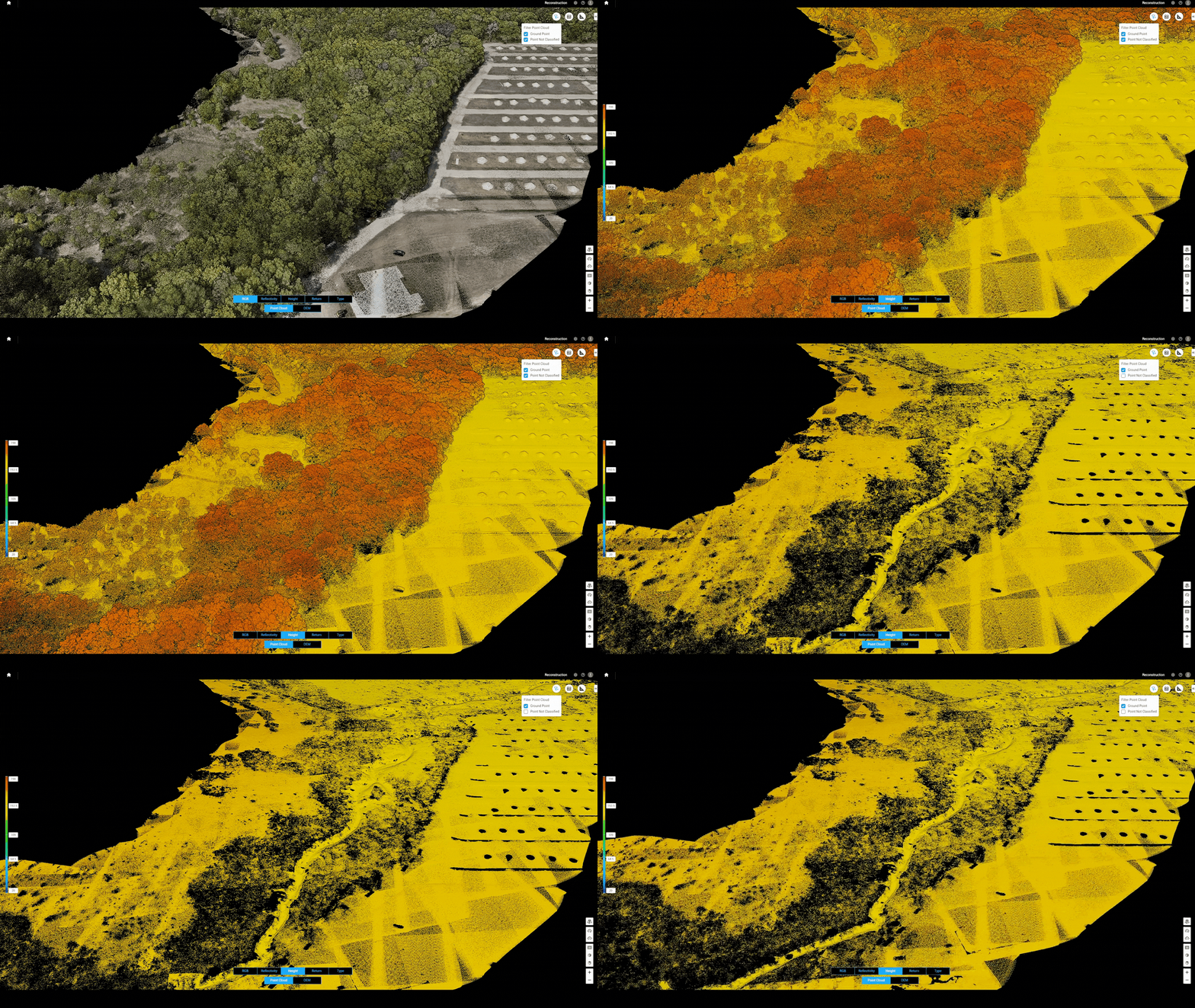

Surveyors and cartographers rely on drones to generate highly accurate maps and 3D models of landscapes, construction sites, mines, and archaeological digs. With GPS and sophisticated imaging technology, drones can cover vast areas quickly, reducing human error and project time.
In construction, real-time drone data enables project managers to track progress, detect deviations from plans, and improve safety. In disaster response, up-to-date maps assist in coordinating relief efforts.
9. Entertainment, Sports, and Events
Drones have added a new dimension to entertainment, from capturing dynamic sports footage to orchestrating mesmerizing drone light shows. In sporting events, drones film athletes from unique angles, enriching TV broadcasts and analysis.
Drone racing has emerged as a sport in its own right, with pilots navigating obstacle courses at high speeds, broadcast to enthusiastic audiences worldwide. Drone light shows, using fleets of synchronized drones, replace fireworks with precise, eco-friendly displays at major events, festivals, and celebrations.
10. Military and Defense Applications
The military was an early adopter of drone technology, and UAVs continue to play critical roles in defense. Drones conduct reconnaissance, surveillance, and intelligence-gathering missions, often in hostile territories where sending personnel would be too risky.
Armed drones carry out targeted strikes, while others are used for communications relay, mine detection, or supply drops. The ethical, strategic, and security implications of military drones remain subjects of debate, underscoring the need for transparent policy and international regulation.
Conclusion
The top ten uses and applications for drones reflect their transformative impact on society. As technology advances, drones are becoming smarter, more autonomous, and accessible to a wider range of users. They offer solutions to longstanding challenges across industries, improving efficiency, safety, and sustainability.
However, the proliferation of drones also raises important questions about privacy, airspace regulation, and environmental impact. As we embrace these innovations, a balanced approach is essential—one that harnesses the potential of drones while addressing the ethical and regulatory challenges they present.
The journey of drones is just beginning. From the fields of agriculture to the skies above concert crowds, their flight path is limited only by our imagination. As drones become increasingly integrated into our daily lives, their applications will continue to expand, opening new horizons for discovery, connection, and progress.
STILL HAVE QUESTIONS?
Schedule a Visit @ Criscon Park, Unit 9, 112 Richards Drive, Halfway House, Midrand, Johannesburg
Reach out to us at info@ntsuaviation.com or book a discovery call.